
Gold purity
Is 14k Gold Real Gold?
Yes. 14k gold is 58.3% pure gold alloyed with other metals for strength. Here is what the remaining 41.7% is, why it is there, and how 14k compares with 10k, 18k and 24k.
14k Gold Per Gram,
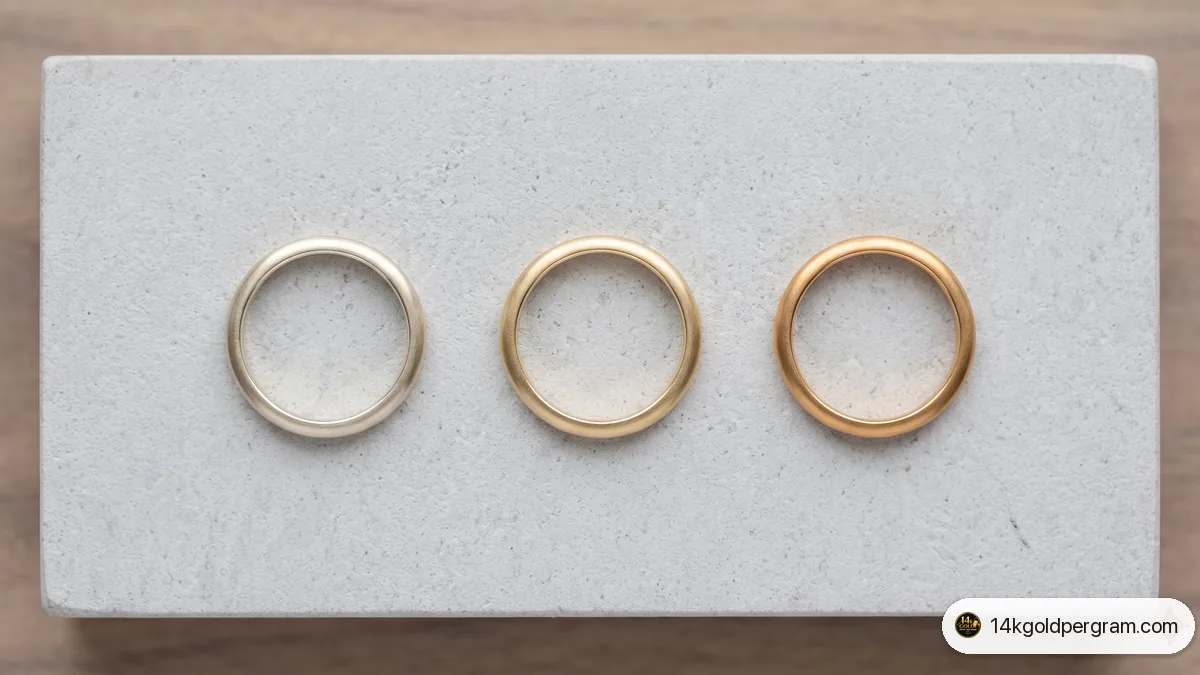
Yes, 14k gold is real gold. It is 58.3% pure gold by weight, mixed with other metals to make it hard enough to wear. The gold runs all the way through it, it is not a coating, and it has genuine melt value you can sell at any time.
The confusion usually comes from a reasonable place. “Real gold” sounds like it should mean pure gold, and 14k plainly is not pure. But nobody makes jewellery from pure gold, because pure gold is soft enough to bend with your fingers.
What the karat number actually means
Karat is a fraction out of 24. 14k is 14 parts gold to 10 parts other metal, which is 14 divided by 24, or 58.3%.
| Karat | Gold content | European stamp | Common use |
|---|---|---|---|
| 24k | 99.9% | 999 | Bullion, investment bars and coins |
| 22k | 91.7% | 916 | Jewellery in South Asia and the Middle East |
| 18k | 75.0% | 750 | Fine and designer jewellery |
| 14k | 58.3% | 585 | The default for everyday jewellery in the US |
| 10k | 41.7% | 417 | Budget jewellery, class rings |
| 9k | 37.5% | 375 | Common in the UK and Australia |
If your piece is stamped 585, that is 14k. So is 583, and so is 14K or 14KT. They are the same thing written by different manufacturers, and there is more on the stamps in our guide to what 585 means on gold.
The price by karat table shows what each purity is worth per gram against the live market, which is the quickest way to see how much the alloy matters to value.
What the other 41.7% is doing
The non-gold part is not filler to cheat you. It is structural, and it sets the colour.
- Copper adds hardness and warmth. Heavy on copper and you get rose gold.
- Silver softens the colour towards pale yellow and improves workability.
- Zinc helps the alloy flow when cast.
- Nickel or palladium bleach the yellow out entirely. That is white gold, which is usually rhodium plated on top for extra brightness. Its melt value is identical to yellow 14k, and the white gold page explains why the plating changes nothing about the metal.
Pure 24k gold in a ring would deform in a pocket and lose a stone within months. 14k holds a setting, survives a knock against a door frame, and keeps its polish. That is why it became the American standard rather than a compromise anyone regrets.
Real gold versus gold plated and gold filled
This is the distinction that matters for value, and it is where most disappointment happens.
Solid 14k is alloy all the way through. Cut it in half and the cross section is the same colour. It has melt value proportional to its weight.
Gold filled is a thick layer of gold mechanically bonded to a base metal core, typically 5% gold by weight. It is stamped 1/20 14K GF or similar. It has some recoverable gold but refiners often will not take it in small quantities. The gold filled page covers what it is actually worth.
Gold plated is a microns-thin electroplated coating over brass or steel. The gold content is measured in fractions of a percent. For scrap purposes it is worth nothing, and no honest buyer will pay you metal value for it.
A piece stamped only “14K” with no fraction and no GF or GP is solid. A fraction in front of the karat, or the letters GF, GP, HGE or RGP after it, means it is not.
Does 14k gold tarnish or turn skin green?
Solid 14k does not tarnish in the way silver does. The copper in the alloy can react with sweat and skincare over years and leave a faint dark film, which polishes off in seconds. It is a surface effect on the alloy, not the gold degrading.
Green skin is almost always a plated piece wearing through to the brass underneath, or a reaction between copper and an acidic skin chemistry. If a ring reliably marks your finger green within weeks, it is worth checking the stamp.
What 14k is worth
Melt value is straightforward: 0.583 grams of fine gold per gram of 14k, multiplied by the spot price per gram. The live calculator shows both the melt figure and the realistic payout range a buyer offers, which are two very different numbers.
The gap matters. A refiner pays 90 to 95% of melt, a high street gold buyer 70 to 85%, a pawn shop 50 to 70%. If you are selling rather than just curious, what a pawn shop actually pays walks through the arithmetic and what moves an offer.
One thing worth saying plainly: you will not get back what you paid at retail. A jeweller’s price includes design, manufacturing, margin and often stones. Melt value is only the metal. That gap is normal, it is not evidence that anyone lied to you, and it is the single most common surprise for first time sellers.